

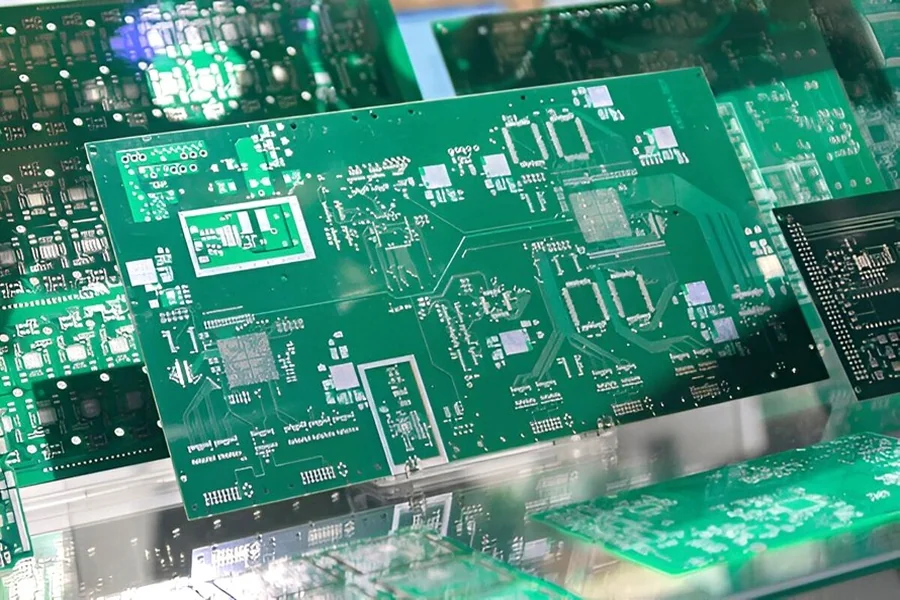
An industrial circuit board is one of the most critical components powering today’s factories, machines, and automation systems. Unlike consumer electronics, which are built primarily for convenience and entertainment, industrial applications demand rugged, reliable, and long-lasting circuit boards capable of performing under extreme conditions. These boards serve as the nerve center of industrial machinery, integrating control systems, sensors, communication modules, and power electronics to ensure continuous operation in environments that often involve high voltages, temperature extremes, dust, and mechanical stress. From manufacturing plants and robotics to heavy equipment and energy systems, the industrial circuit board is at the heart of modern industry.
Functionality and Role of Industrial Circuit Board
The primary role of an industrial circuit board is to regulate and control processes within industrial equipment. These boards receive inputs from sensors, process the signals through microcontrollers or processors, and then send commands to actuators, motors, or displays. For instance, in a robotic arm used in manufacturing, the circuit board manages precise motion control, speed regulation, and feedback from sensors, ensuring accuracy and consistency.
Additionally, industrial PCBs handle power distribution, ensuring that each component receives the required voltage and current. Many include safety circuits that protect against overcurrent, short circuits, or power surges, which is vital in factory environments where downtime can result in significant financial losses. Advanced boards also facilitate communication with industrial networks such as CAN bus, Modbus, or Ethernet, allowing seamless integration into larger automation systems and enabling centralized monitoring.
Design and Material Considerations in Industrial Circuit Board
Designing an industrial circuit board requires a focus on durability and reliability. These boards are often built using high-grade FR-4 substrates, though in applications where thermal performance is critical, materials such as metal-core PCBs or ceramic-based boards are used. The choice of materials ensures that the board can withstand high operating temperatures and provide effective heat dissipation.
Another important factor is the layout design. Industrial boards often need to support high currents and voltages, requiring wider traces and proper isolation between high- and low-power sections. Shielding and grounding practices are essential to minimize electromagnetic interference, especially when the board is part of a system that includes motors, relays, or high-frequency switching devices. Conformal coatings are also applied to protect the circuit from dust, moisture, chemicals, and other contaminants that are common in industrial environments.
Applications of Industrial Circuit Board
The industrial circuit board has applications in virtually every sector of modern industry. In manufacturing plants, PCBs control assembly lines, CNC machines, and robotic automation systems. In the automotive industry, they are embedded into testing equipment, welding robots, and quality control systems. The energy sector relies heavily on industrial PCBs for controlling power distribution networks, managing renewable energy sources, and monitoring grid stability.
Additionally, heavy machinery such as excavators, mining equipment, and cranes integrate industrial circuit boards to ensure precise operation under extreme mechanical stress. In HVAC and building automation, these boards regulate temperature, air quality, and power usage in large facilities. With the rapid adoption of Industry 4.0 and smart factories, industrial PCBs are now being integrated with IoT technologies, enabling predictive maintenance, real-time monitoring, and cloud-based analytics.
Advantages of Industrial Circuit Board
The biggest advantage of an industrial circuit board is its ability to enhance reliability and reduce downtime in critical operations. Since industrial machinery must often run 24/7, the PCB must deliver consistent performance under continuous load. Energy efficiency is another major advantage, as boards are designed to optimize power consumption while still delivering high output.
Safety is also a key benefit. By incorporating advanced protective circuits, these boards prevent equipment failures that could lead to costly repairs or accidents. Furthermore, the adaptability of industrial PCBs allows them to be customized for a wide range of applications, making them suitable for everything from small automated devices to large-scale energy management systems. The integration of smart technology also adds value, allowing industries to make data-driven decisions and increase productivity.
Challenges in Industrial Circuit Board Development
Despite their advantages, designing and manufacturing an industrial circuit board comes with several challenges. The harsh operating conditions mean that engineers must account for factors such as heat, dust, vibration, and electromagnetic interference. Meeting international safety and compliance standards adds to the complexity, as every board must be thoroughly tested before deployment.
Cost is another consideration, as industrial boards often require specialized materials and advanced manufacturing processes to meet durability requirements. The growing demand for miniaturization also poses challenges, since packing more functionality into smaller boards increases the risk of overheating and signal interference if not carefully managed.
Future Trends in Industrial Circuit Board
The future of the industrial circuit board is closely tied to the evolution of smart factories and Industry 4.0. As automation and robotics become more advanced, boards will need to integrate AI-powered processors and faster communication interfaces to handle larger amounts of data in real time. The demand for energy-efficient and environmentally sustainable boards is also increasing, pushing manufacturers to adopt greener materials and improved thermal management techniques.
Flexible and modular PCBs may also gain traction, allowing industries to adapt their systems more quickly to changing production requirements. Furthermore, with the rise of 5G and industrial IoT, future boards will feature enhanced connectivity, enabling seamless integration into digital ecosystems where machines communicate and coordinate autonomously.
Conclusion
The industrial circuit board is the foundation of modern industrial technology, driving automation, safety, and efficiency across countless applications. Its design and performance directly impact the reliability and productivity of machinery and equipment, making it indispensable in today’s competitive industrial landscape. As industries continue to evolve toward smarter, more connected, and energy-efficient operations, the importance of high-quality circuit boards will only increase. For businesses seeking dependable and advanced solutions, partnering with a trusted industrial circuit board manufacturer ensures access to boards engineered for maximum performance, durability, and compliance with the most demanding industrial standards.